


Room to play, space to grow
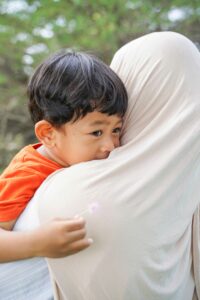
When two-year-old Noah* first arrived at Heywood House with his mother, the world was a frightening place.
He rarely made eye contact, didn’t speak and struggled to be away from his mum – even for just a moment.
“He was really shut off from the world,” a McAuley Specialist Children’s Practitioner (children’s worker) said. “Even coming through the doors was frightening for him. He found it incredibly hard to be away from his mum.”
At just two years old, Noah couldn’t explain what he was experiencing, but his interactions with the world around him offered important clues about the support he needed.
Small steps towards feeling safe
“Often when children have been through difficult experiences, they need to feel safe before they can start to show you what they know and what they can do,” McAuley’s Enhanced Maternal Child Health Nurse (nurse) said.
 For the children’s worker, helping Noah feel comfortable meant starting slowly and working at his pace. She noticed his fascination with toy cars, and used this as a gentle way to connect with him.
“It was a slow process, just finding out what he was interested in and gradually building his trust,” she said.
While at first, Noah was too frightened to stay in the playroom without his mother, he gradually began venturing further from her side as his trust in the team grew.
“One day, he just grabbed my hand and said ‘bye-bye Mum!’ and we waved to her together as she walked back to their room,” the children’s worker said. “It was a huge step for him.”
For children like Noah, play is an important part of the healing journey, offering a safe and familiar way to process what’s happened and begin connecting with the world around them.
Through activities like drawing, playdough, sensory games and imaginative play, our children’s workers help children to explore feelings they may not yet have the words to describe.
Finding his voice
McAuley’s nurse also worked closely with Noah’s mother to understand his needs and find practical ways to support his development.
The toddler years are an important time as children develop communication skills, explore their surroundings and become more independent. While every child’s development follows their own timeline, supporting Noah’s communication was an important part of helping him connect with the people and world around him.
 When he first arrived, Noah hadn’t started talking yet. Instead, he would point or take his mother by the hand and lead her towards what he wanted. He also struggled with eating and sleeping.
Having the nurse on site at Heywood House meant that support could become part of their everyday life, without the added challenge of managing travel and appointments.
It also allowed her to observe Noah in his own environment, understand what works best for him and adjust the approach as he grew more comfortable.
“Noah’s mum was very determined to help his development, so I was there to give her ideas and support her along the way,” the nurse said.
Much of the progress happened through ordinary, everyday moments. “Reading together, talking about what you see, naming objects and colours, things like that can really help.”
They also worked together to reduce his screen time and find other activities to hold his attention to provide new opportunities for Noah to continue to develop and improve.
“We tried to find things that we knew he would like and incorporate those interests into learning activities,” the nurse said.
“We’d sit down on the floor with blocks and play with him, or pretend to post letters. It took a little time, but he started to engage with us. Before long, he was eating better and beginning to talk.”
And once the words started, the nurse said they came quickly. “Even though he wasn’t talking yet, he had obviously still been listening and picking things up the whole time.”
A world of possibilities
As Noah became more comfortable at Heywood House, his world began to open up.
He discovered a love of Sing&Grow, a music therapy program that helps young children learn and connect with their parents through music and movement. At first, he mostly watched from the sidelines, but it didn’t take long before he joined in himself.
Starting childcare was another important milestone for Noah, who had never been before coming to Heywood House. The children’s team helped Noah’s mum explore local options and supported her to find one he could attend.
He initially struggled to be away from his mum but gradually settled into a routine, attending twice a week and connecting with other children. And as his confidence grew, he also began sleeping during the day, something he’d previously been unable to do.
“He was constantly on guard at the beginning,” the children’s worker said.
“Now he’s starting to trust that he’s safe. He can relax enough to actually go to sleep, which is incredible.”
Noah is now a more confident, curious version of the boy who first arrived at Heywood House. He talks, plays, explores and comfortably spends time away from his mum as his world continues to grow.
His mum is even now considering increasing his childcare attendance to three days per week – an achievement that seemed impossible for a boy who struggled to even make eye contact.
It didn’t happen overnight, but with the support of McAuley’s children’s team, Noah is well on his way to recovery.
“He’s a completely different little boy now. It’s amazing to see how far he’s come,” McAuley’s nurse said.
*Name has been changed to protect privacy.